
Safety Glazing Assessments: What They Are, Why They Matter, and When They Are Required
Glazing is an essential part of most modern buildings, but it can also present a significant safety risk if it is installed in the wrong location, inadequately protected, poorly marked, or not manufactured from appropriate safety glass.
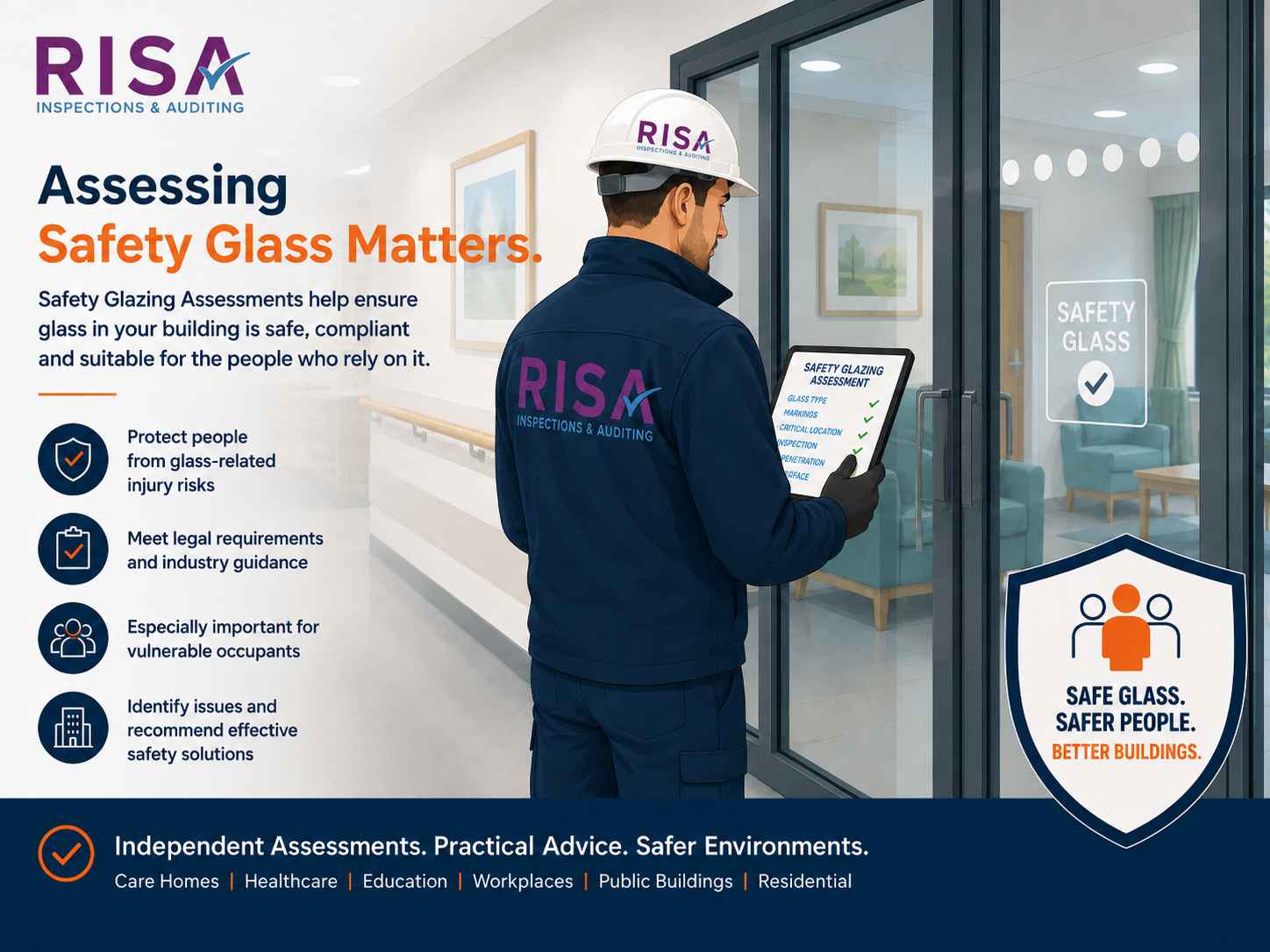
A Safety Glazing Assessment is a targeted inspection of glazing within a building to identify whether glass in risk locations is suitably safe for the way the building is used. It is particularly relevant in workplaces, schools, care homes, healthcare premises, commercial buildings, communal residential areas and public-facing premises.
At RISA, we regularly inspect glazing installations for safety, compliance, performance and suitability. Our independent inspection service provides building owners, contractors, facilities managers and duty holders with clear, practical reporting on glazing-related risks and any remedial works required.
What is a Safety Glazing Assessment?
A Safety Glazing Assessment is a risk-based inspection of glass in windows, doors, screens, partitions and other glazed elements where people may come into contact with the glazing.
The purpose is to determine whether the glazing is appropriate for its location and use. This may include checking whether the glass is:
- safety glass, such as toughened or laminated glass;
- appropriately marked with safety glass identification;
- located in a recognised “critical location”;
- protected by guarding, barriers or other permanent protection;
- adequately manifested so that people can see the glazing;
- suitable for vulnerable users, visitors, residents, staff or members of the public;
- in need of replacement, safety film, guarding, manifestation or further investigation.
The assessment is not simply a general window condition survey. It is more focused than that. It considers the risk of injury from impact with glazing, falling against glazing, falling through glazing, or failing to see large transparent glazed screens and doors.
In some cases, however, the assessment may also identify wider window and door safety concerns, such as defective restrictors, missing manifestation, loose beads, failed protective film or unsuitable guarding.
Why are Safety Glazing Assessments necessary?
The key legal and technical background includes Regulation 14 of the Workplace (Health, Safety and Welfare) Regulations 1992, Approved Document K of the Building Regulations, and relevant British Standards including BS 6262-4 and BS EN 12600.
Regulation 14 requires transparent or translucent surfaces in walls, partitions, doors and gates to be safe, protected against breakage and appropriately marked where necessary for health and safety reasons.
Approved Document K provides guidance on protection against impact with glazing. It explains that glazing likely to be contacted by people moving in or around a building should either break safely, resist impact without breaking, or be protected from impact. It also identifies critical glazing locations, including low-level glazing, doors and side panels.
For health and social care premises, the need for assessment can be even more important. HSE guidance states that health and social care providers must assess risks at their premises and, where there is a risk of falling against or through glazing, adequate precautions should be taken. These may include safety film, replacement with safety glass or barriers. (HSE)
This is particularly relevant in buildings occupied by vulnerable people, including care home residents, hospital patients, children, elderly occupants, or those with reduced mobility, impaired vision, dementia or reduced capacity.
What are “critical locations”?
“Critical locations” are areas where glazing is more likely to be impacted by people and where breakage could result in injury.
These commonly include:
- glazing in doors;
- side panels next to doors;
- low-level windows;
- glazed screens and partitions;
- large transparent glazed areas in circulation routes;
- patio doors and full-height glazing;
- glazing in communal areas, corridors, lounges and entrances.
Approved Document K identifies critical locations for impact safety, including glazing in doors and side panels up to 1500 mm above floor level, and low-level glazing in windows, walls and partitions up to 800 mm above floor level.
Where glazing falls within these locations, it should generally be safety glass, sufficiently robust, in small panes, or protected by permanent guarding or screening.
What types of properties may need a Safety Glazing Assessment?
Safety Glazing Assessments are particularly relevant for buildings where glazing is accessible to staff, residents, visitors, customers or the public.
Typical examples include:
- care homes and assisted living accommodation;
- hospitals, clinics and healthcare buildings;
- schools, nurseries and colleges;
- offices and workplaces;
- hotels and leisure facilities;
- shops, showrooms and public buildings;
- communal areas in apartment blocks;
- student accommodation;
- social housing and supported living schemes;
- commercial refurbishment projects;
- buildings undergoing change of use or upgrade works.
Care homes are a particularly good example. In these environments, the assessment should not only consider whether the glass is technically compliant in a standard sense, but also whether the glazing is suitable for the building’s actual occupants. Residents may be elderly, frail, visually impaired, confused, or at increased risk of falling. That changes the practical risk profile of low-level glazing, patio doors, screens, partitions and windows.
What does a Safety Glazing Assessment involve?
A RISA Safety Glazing Assessment would typically include a site inspection of relevant glazing locations, followed by a clear written report or schedule of findings.
RISA inspections go beyond a basic visual check. In addition to checking for physical safety glass markings, our inspectors can use specialist glass analysing equipment to help identify the type and make-up of installed glazing. This allows us to provide a more informed assessment, particularly where existing glazing is unmarked, older, undocumented or difficult to verify.
The findings are then considered against the location, use of the building, exposure to impact, occupant vulnerability and relevant safety glazing guidance, allowing RISA to provide clear and proportionate recommendations for any remedial works required.
The inspection may include:
- identifying glazing in critical locations;
- checking for visible safety glass markings;
- advanced glass identification testing;
- reviewing whether the glass appears to be toughened, laminated, wired, filmed or unverified;
- assessing the risk of human impact;
- considering the need for manifestation to large transparent doors or screens;
- identifying glazing that may require replacement, safety film or guarding;
- reviewing fall-through or fall-against risks;
- considering building use and occupant vulnerability;
- producing a schedule of recommended remedial works.
Why choose RISA?
RISA is a specialist independent inspection company with extensive experience in glazing, fenestration and compliance inspections.
Unlike a glazing contractor, RISA is not attending site with the intention of pricing or carrying out the remedial works. Our role is to inspect, assess and report independently. This means our recommendations are based on observed risk, relevant guidance and proportionate remedial need — not on generating replacement work.
This independence is particularly important for Safety Glazing Assessments. Where a contractor is asked to both identify the problem and carry out the remedial works, there can be a perceived or actual conflict of interest. Building owners, managing agents and duty holders need confidence that any recommendations are technically justified, proportionate and commercially impartial.
RISA provides that independent view.
Our reports are designed to help clients understand:
- which glazing locations present a genuine safety concern;
- what evidence is available regarding the glass type or safety performance;
- where remedial action is necessary;
- where further investigation may be required;
- where no action is reasonably required.
This allows clients to make informed decisions, obtain competitive prices for any necessary remedial works, and avoid unnecessary or inflated scopes of work.
Timely, proportionate and cost-effective reporting
Not every building needs a full intrusive investigation or wholesale replacement of glazing. In many cases, what is needed is a competent assessment, a clear schedule of risk items, and practical recommendations.
RISA can provide a targeted inspection service that focuses on the relevant risk areas and delivers findings in a format that can be used by building owners, contractors, facilities teams and duty holders.
This makes the process both timely and cost-effective. The aim is to identify what is necessary, what is proportionate, and what remedial action is actually required.
When should you commission a Safety Glazing Assessment?
A Safety Glazing Assessment should be considered where:
- a building contains low-level glazing, glazed doors or large glazed screens;
- the property is used by vulnerable occupants;
- there has been a change of use or refurbishment;
- a contractor or client specification requires a glazing assessment;
- there is uncertainty over whether existing glass is safety glass;
- glazing lacks visible safety markings;
- a health and safety audit has identified potential glazing risks;
- a duty holder needs evidence that glazing risks have been reviewed.
For care homes, schools, healthcare premises and public-facing buildings, a proactive assessment can be particularly valuable.
Speak to RISA
If you are responsible for a building and need to understand whether your glazing is safe, compliant and suitable for its environment, RISA can help.
Our independent Safety Glazing Assessments provide clear, technically informed reporting and practical recommendations for remedial works where required.
Whether you manage a single property or a wider estate, RISA can deliver a timely, proportionate and cost-effective inspection service tailored to your requirements.
Contact RISA to discuss a Safety Glazing Assessment for your building or estate.