
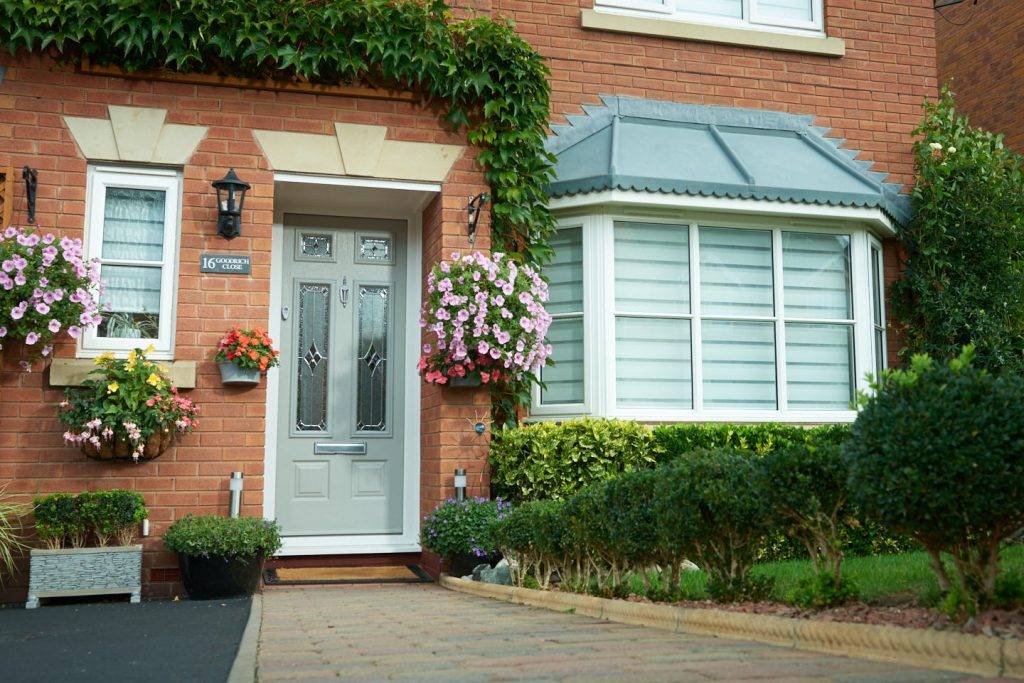
Composite door draughts, gaps and difficult locking: what is causing the problem?
A composite front door should provide a secure entrance, reliable weather protection and straightforward everyday operation. If yours lets in draughts, catches on the frame or needs a firm push or pull before it will lock, it is worth finding out why.
At RISA, we receive regular enquiries about composite entrance doors, particularly doors that do not seal properly or are difficult to operate. Similar symptoms can have different causes. The problem may lie in the installation, the adjustment of the hardware, the condition of the weather seals or distortion of the door slab itself.
Our dedicated composite entrance door inspection examines these common problems and provides clear, evidence-based recommendations for putting them right.
Why the whole doorset matters
The opening part of the door is often called the slab or leaf. It is made from a combination of materials and is commonly fitted into a uPVC outer frame. Composite construction varies between manufacturers, so doors should be assessed against the requirements of their particular system.
The slab, frame, hinges, locking mechanism, weather seals and threshold work together. A problem with any one of these elements can affect how the door closes and seals.
The Association of Composite Door Manufacturers (ACDM) describes the importance of manufacturing specifications, performance evidence and competent installation. This supports an essential principle of our inspection approach: assess the complete installed doorset rather than looking only at the slab.
Draughts around a closed door
A draught may be noticeable around the top, bottom or sides of the door, especially during windy weather. Sometimes homeowners can see daylight at a corner or feel air entering near the hinges or threshold.
Our investigation considers several possible routes: an ineffective seal between the slab and frame; damaged, displaced or poorly joined weather seals; the threshold detail; letterplates and other fittings; and the joint between the outer frame and surrounding wall.
These distinctions matter. Adjusting the lock will not repair a defective seal between the frame and the wall. Equally, adding sealant around the outside of the frame will not correct a slab that fails to meet its weather seals.
It is also important to distinguish an intended clearance from an unsealed opening. Doors need a working gap between the slab and frame. The question is whether the weather seals bridge the relevant junction and make effective contact when the door is closed in its intended operating condition.
Frame misalignment: a common area to investigate
A door can look neatly finished while its frame is incorrectly positioned. We check whether the frame is properly aligned, supported and secured, including whether the jambs—the upright sides—have been distorted during installation.
Endurance’s installation guidance, for example, requires checks for alignment and packing at fixing positions, and warns about bowing caused by overtightening. It also specifies a controlled setting of the lock jamb for its own system. The lesson is to follow the particular manufacturer’s installation detail rather than apply one universal rule to every door. [2]
Where the frame and slab do not meet correctly, a homeowner may experience uneven clearances, rubbing, poor seal contact or resistance when locking. Our inspection considers whether adjustment is appropriate or whether the frame itself requires correction.
Why is the door difficult to close or lock?
Common complaints include having to slam the door, pull hard on the handle, lift the slab or push a corner before the locking points will engage.
We examine the relationship between the hinges, slab and locking keeps—the receiving fittings attached to the frame. We also consider whether the door has dropped, whether it catches at the threshold, and whether the weather seals are being compressed excessively.
A door that feels tight is not necessarily sealing well. It may be pressing firmly against the seals in one place while leaving insufficient contact elsewhere. The aim is appropriate seal contact together with usable operation.
Repeated adjustment without a clear diagnosis can leave the homeowner with a changing problem: an adjustment improves locking but introduces a draught, or reduces a draught but makes the door difficult to close. Our assessment considers both operation and sealing together.
Bowing of the composite door slab
Bowing occurs when the slab curves rather than remaining flat. It can change how the top, middle and bottom of the door meet the frame.
Manufacturers recognise that composite doors can move as environmental conditions change. Rockdoor discusses expansion and contraction, particularly on south-facing doors, and explains that its system is designed to accommodate limited bowing while maintaining operation. Solidor’s published care instructions also describe small initial movement in its timber-core doors as they acclimatise. [3, 4]
However, an explanation of thermal movement does not, by itself, establish that a particular door is performing satisfactorily. We consider the measured distortion, the applicable manufacturer’s guidance and the effect on closing, locking and seal contact.
How much bowing is acceptable?
There is no single figure that should be applied indiscriminately to every composite door. Rockdoor currently describes a 3 mm bow guarantee, while Hallmark advertises a 3 mm thermal movement tolerance for its doors. Those statements relate to the respective products and terms; they are not a universal tolerance for the industry. [3, 5]
Our inspection includes checking for slab bowing and distinguishing it from frame distortion. Where relevant guidance is available, measurements are assessed using the manufacturer’s stated method and conditions.
If the problem changes with sunshine, temperature or time of day, tell us when it occurs. Photographs and a record of the conditions can be useful. An inspection records the condition found during the visit; an intermittent problem may require further evidence or a review under different conditions.
Weather seals, thresholds and maintenance
Weather seals need to be correctly fitted and in suitable condition. Our checks consider their continuity, corner junctions and contact with the slab, along with the threshold and accessible surrounding seals.
Maintenance and correct use also form part of the assessment. Some manufacturers require the multipoint locking points to be engaged whenever the door is closed. Solidor’s instructions specify this and distinguish between manually operated and automatic arrangements. Follow the instructions for your particular door and lock. [4]
Lubrication requirements also vary. Use the products and intervals recommended by the door and hardware manufacturers. Maintenance can help moving parts operate properly, but it cannot correct an incorrectly installed frame or resolve every cause of slab distortion.
Avoid experimenting with hinge or keep adjustments before the underlying issue is understood. Rockdoor, for example, recommends that adjustments are undertaken by a competent installer. [3]
What does a RISA composite entrance door inspection check?
Our inspection is designed to establish what is happening, identify the likely causes and explain the appropriate next steps. Depending on the door and access available, it covers:
Frame alignment, distortion and accessible fixings and support.
Slab position, clearances and evidence of dropping, bowing or twisting.
Weather seal condition, continuity and contact around the door.
Hinge condition and the relationship between the lock and its keeps.
Closing, opening and locking operation.
Threshold condition and accessible frame-to-wall sealing.
Relevant manufacturer instructions and product information supplied.
The findings are supported by measurements and photographs where appropriate. Our recommendations distinguish between adjustment, repair, installation correction and replacement where the evidence supports it.
We also explain any limitations. Concealed fixings or seals cannot always be fully assessed without opening up, and a condition inspection does not establish a laboratory air-permeability or security classification. If further investigation or testing is needed, we identify that in our recommendations.
Get a clear explanation of your door problem
If your composite front door is draughty, does not close tightly or is difficult to operate, a focused independent inspection can give you a clearer basis for discussing the problem with your installer or supplier.
Contact RISA to book a composite entrance door inspection. We will assess the common problem areas, including frame alignment and slab bowing, and provide clear, evidence-based recommendations.